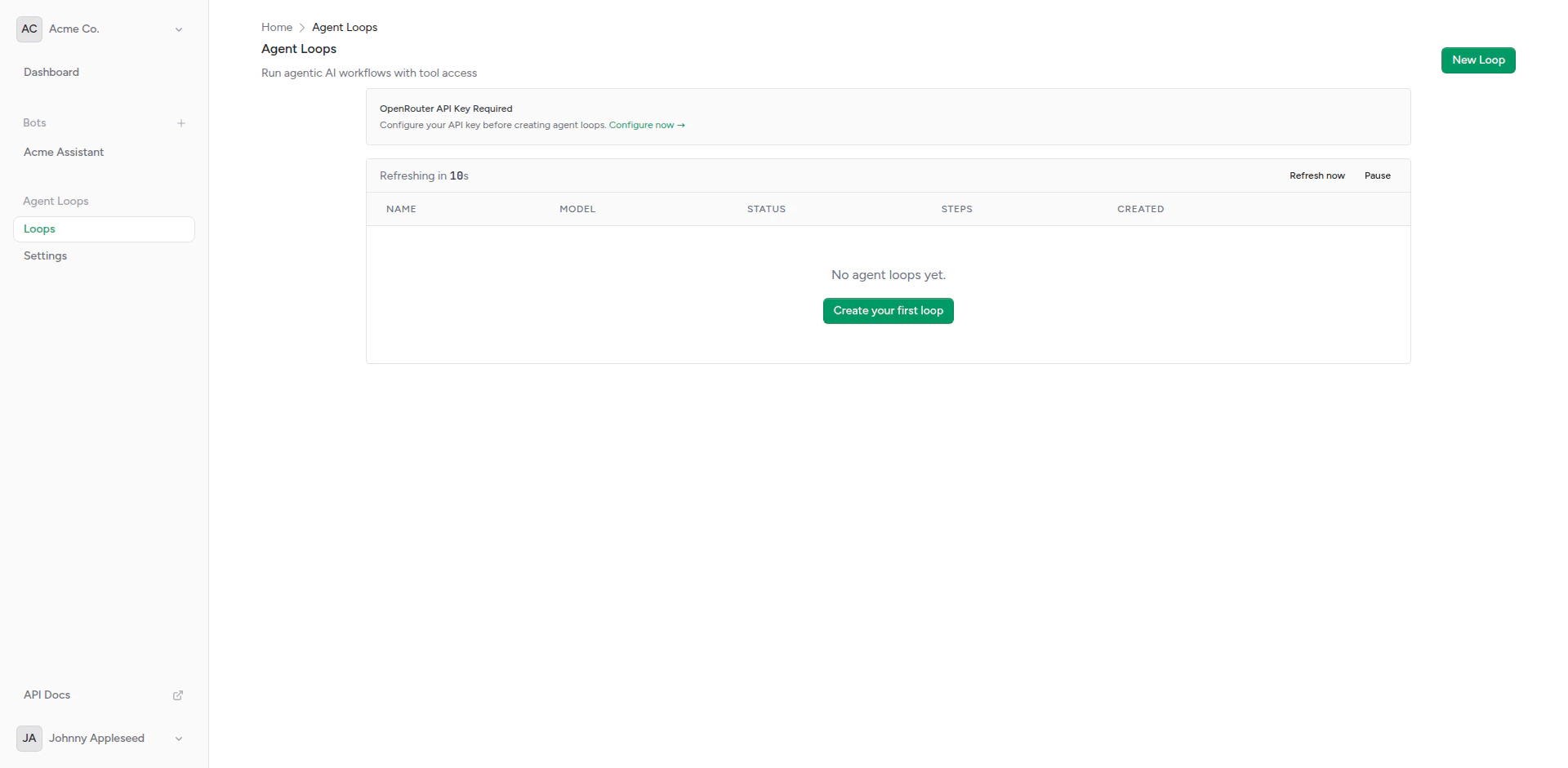
Agentic loops in action
The Hallucination Problem
Large Language Models (LLMs) generate responses based on patterns learned during training. When asked about current information, specific data, or facts they don’t know, they often “hallucinate” - producing plausible-sounding but incorrect answers. Common Hallucination Examples:- Outdated Information: “The current temperature in Paris is…” (guessing based on training data)
- Fabricated Data: “Your order #12345 shipped yesterday” (making up order details)
- Invented Sources: “According to a 2023 study…” (citing non-existent research)
- Wrong Facts: “The meeting is at 3 PM” (guessing instead of checking the calendar)
The Agentic Solution
Agentic Loops solve the hallucination problem by connecting LLMs to real-world data sources. Instead of guessing, agents:- Recognize when they need external information
- Use tools to fetch accurate, current data
- Ground responses in retrieved facts
- Verify information before answering
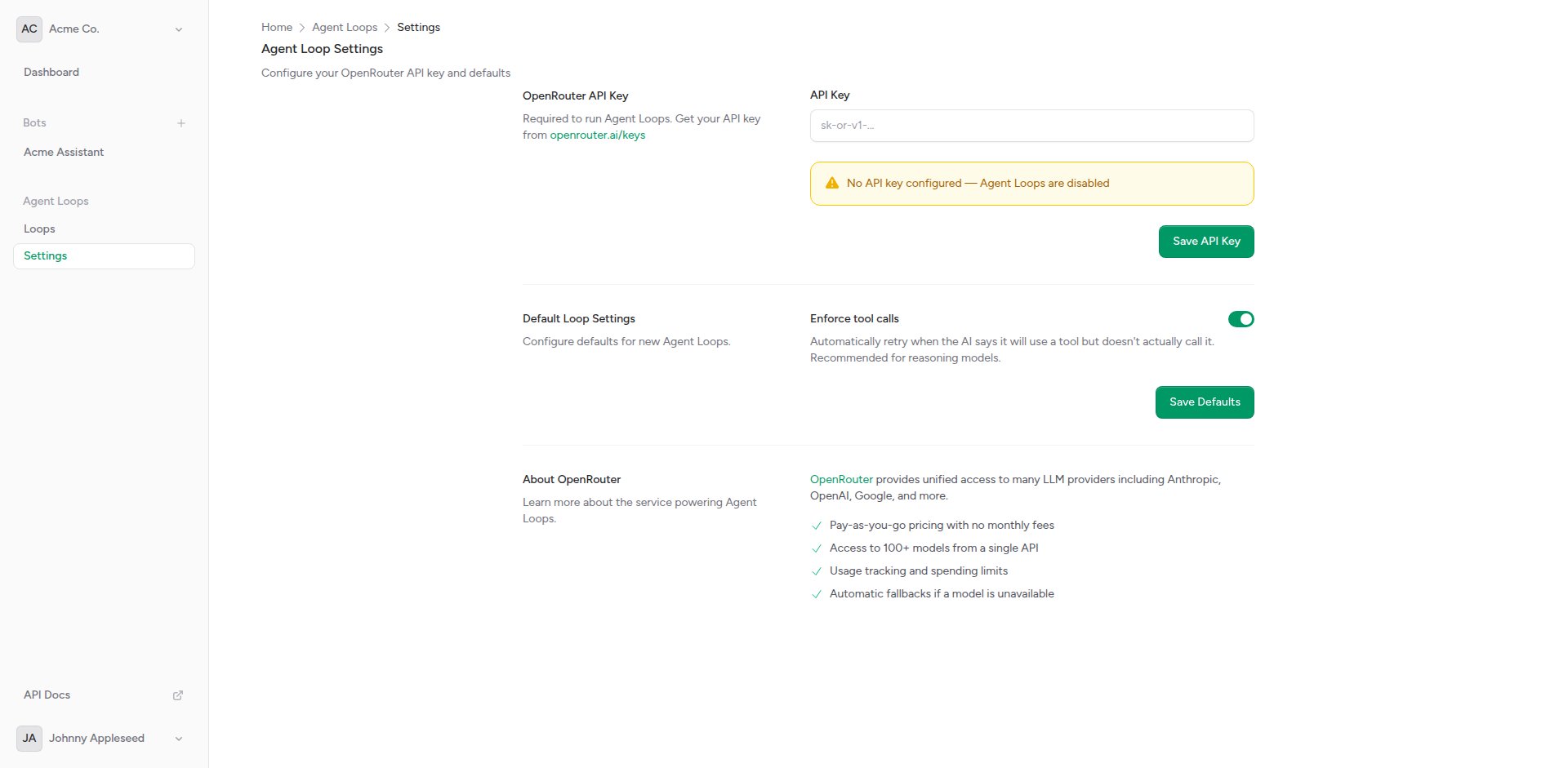
Agent configuration
How Agentic Loops Reduce Hallucinations
Traditional LLM Response
Agentic Loop Response
Key Benefits
Eliminate Hallucinations
Ground responses in real-world data instead of guessing
Current Information
Access live data, not outdated training information
Verifiable Answers
Every fact comes from a traceable source
Autonomous Operation
Agents decide which tools to use and when
When to Use Agentic Loops
Use Agentic Loops when your AI needs to: Access Current Data:- Weather, stock prices, exchange rates
- Real-time system status
- Current inventory levels
- Customer order details
- User account information
- Database records
- Check appointment schedules
- Validate addresses
- Confirm product availability
- Create calendar events
- Send notifications
- Update database records
Don’t use Agentic Loops for: General knowledge questions, creative writing, or tasks where the LLM’s training data is sufficient. Reserve agents for tasks requiring current, verifiable data.
Real-World Example: Customer Support
Without Agentic Loops (High Hallucination Risk)
With Agentic Loops (Grounded in Data)
Components of an Agentic Loop
1. System Prompt
Defines the agent’s role, capabilities, and available tools.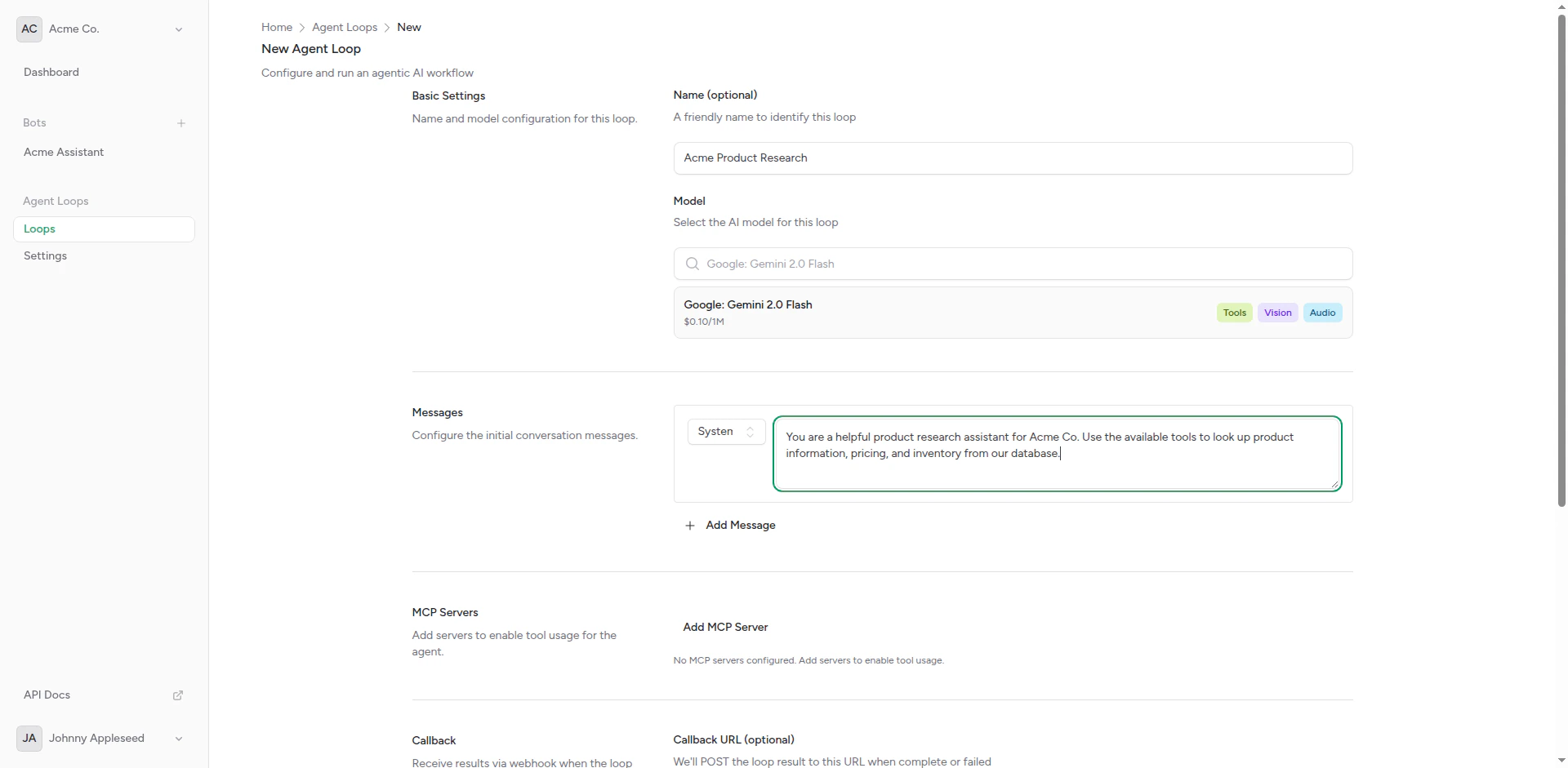
System prompt configuration
2. User Message
The task or question the agent needs to address.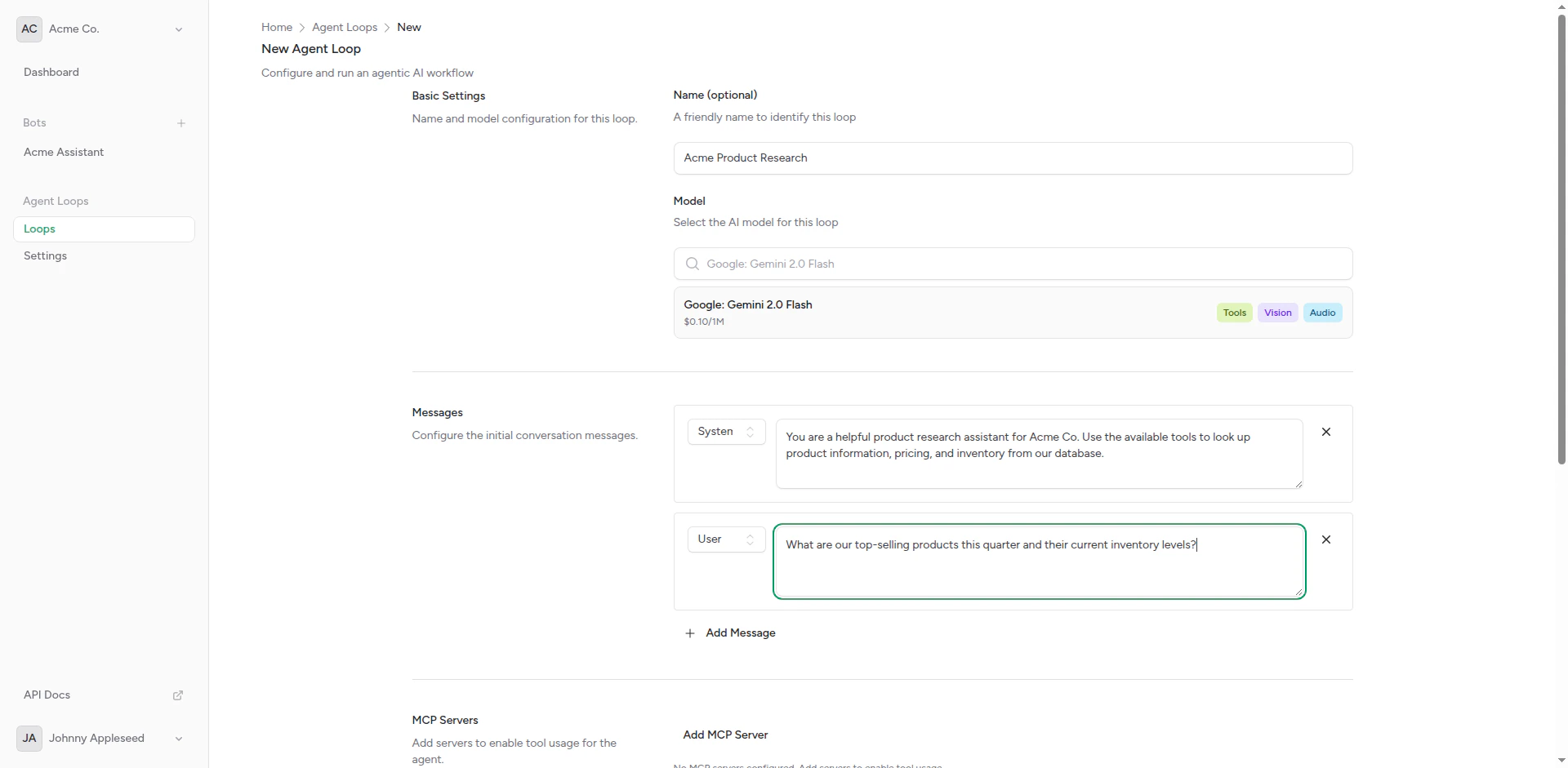
User message input
3. MCP Servers (Tools)
External data sources and services the agent can access.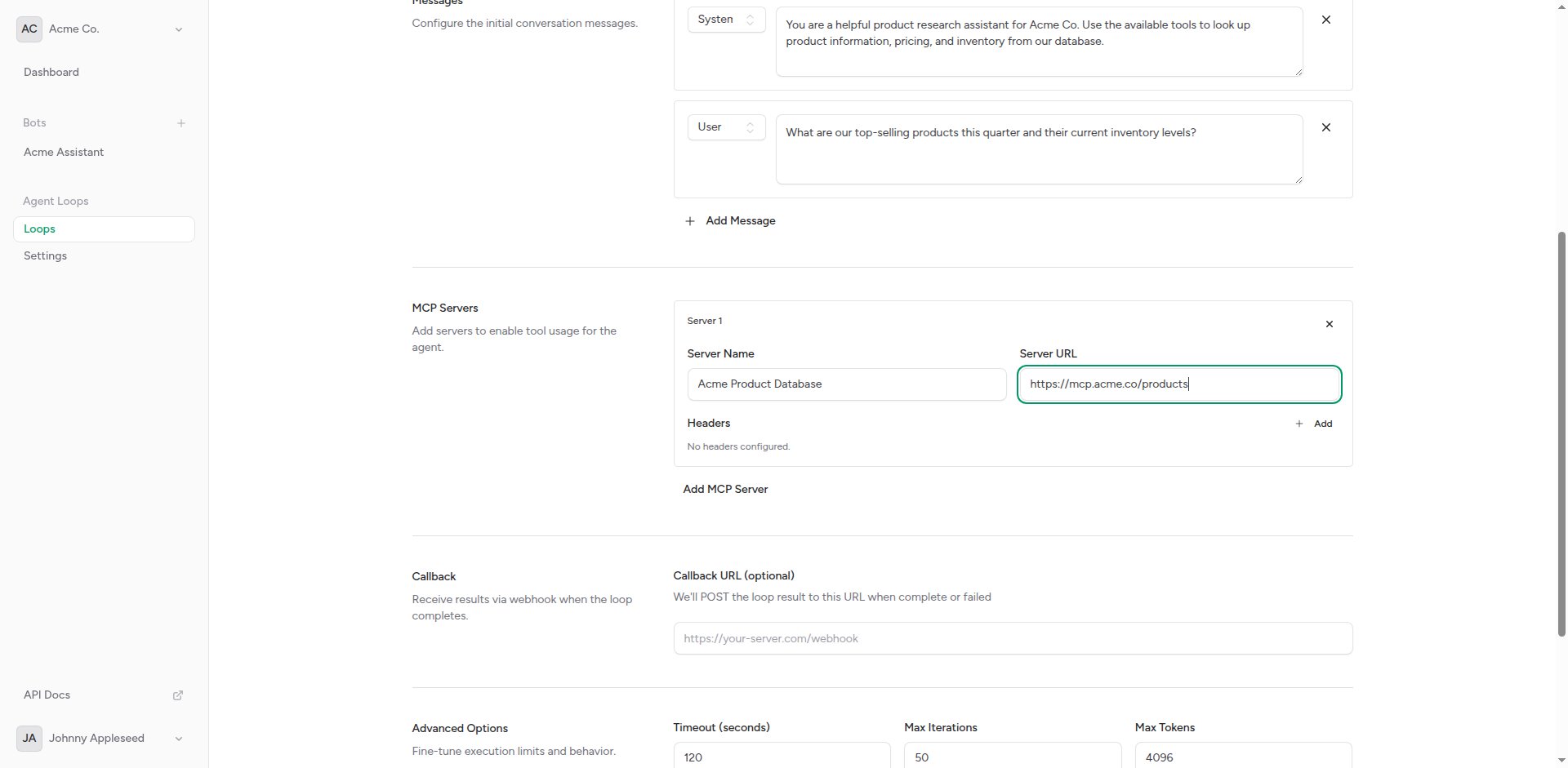
MCP server configuration
4. Callback Webhook
Where to send results when the agent completes its task.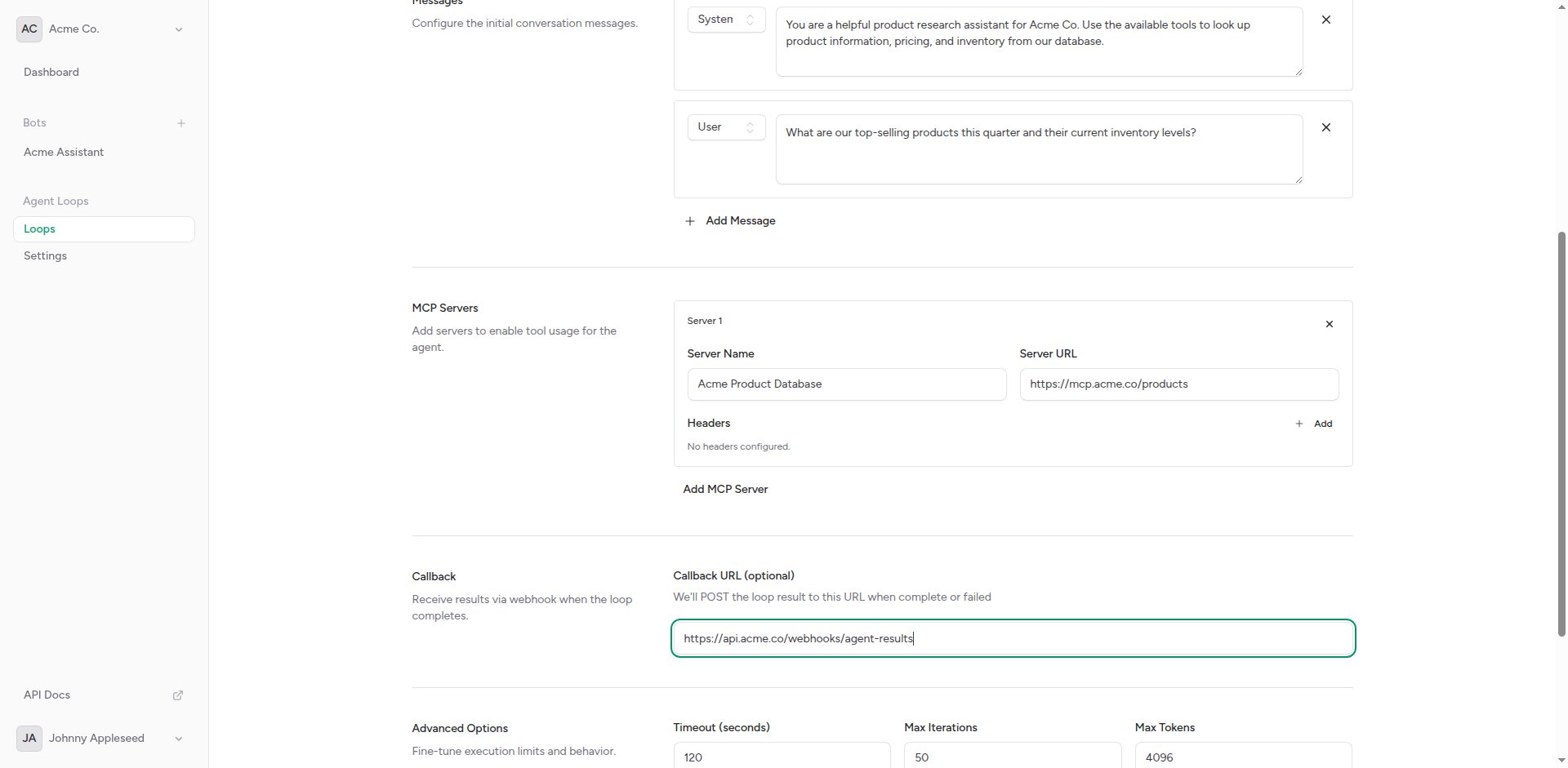
Callback setup
Agentic vs. Traditional Chatbots
Use Cases by Industry
E-Commerce
- Order status tracking (no more guessing)
- Inventory checks (real availability)
- Shipping estimates (actual carrier data)
Healthcare
- Appointment scheduling (real calendar data)
- Patient record lookup (verified information)
- Lab result delivery (actual test results)
Financial Services
- Account balance inquiries (live data)
- Transaction verification (real records)
- Fraud detection (current patterns)
IT Support
- System status checks (live monitoring data)
- Ticket status updates (real ticket system)
- Knowledge base search (verified documentation)
Getting Started
Ready to build agents that ground their responses in real-world data?How It Works
Learn the reasoning cycle behind agentic loops
Create Your First Loop
Build an agent in 5 minutes
Available Tools
Explore MCP servers and data sources
Best Practices
Optimize performance and cost